Статья опубликована в рамках: CCXXXVI Международной научно-практической конференции «Научное сообщество студентов: МЕЖДИСЦИПЛИНАРНЫЕ ИССЛЕДОВАНИЯ» (Россия, г. Новосибирск, 11 мая 2026 г.)
Наука: Педагогика
Скачать книгу(-и): Сборник статей конференции
дипломов
PSYCHOLOGICAL FOUNDATIONS OF GAMIFICATION IN ENHANCING LONG – TERM MEMORY IN FOREIGN LANGUAGE LEARNING

ПСИХОЛОГИЧЕСКИЕ ОСНОВЫ ГЕЙМИФИКАЦИИ В УСИЛЕНИИ ДОЛГОВРЕМЕННОЙ ПАМЯТИ ПРИ ИЗУЧЕНИИ ИНОСТРАННОГО ЯЗЫКА
Ералы Аяулым
магистрант, Южно-Казахстанский педагогический университет имени У. Жанибекова,
Казахстан, Шымкент
Жорабекова Айнур Назимбековна
научный руководитель, PhD, ассоциированный профессор, заведующая кафедрой «Иностранный язык для технических специальностей», Южно-Казахстанский университет имени М. Ауэзова,
Казахстан, Шымкент
ABSTRACT
In recent years, gamification has been widely applied in foreign language learning to enhance motivation. However, students often focus more on the entertaining aspects of gamified activities rather than the learning objectives. While games encourage participation, learners tend to prioritize achieving high scores or completing challenges over truly memorizing vocabulary, which leads to rapid forgetting within a few days. This study investigates the psychological underpinnings of gamification in promoting long-term vocabulary retention. A total of 53 bachelor students participated in the research, divided into two groups: Group A experienced gamified vocabulary learning through platforms, while Group B followed a non-gamified approach. The main purpose of the study is to investigate the psychological effects of gamification on long-term vocabulary retention in foreign language learning.
АННОТАЦИЯ
В последние годы геймификация широко применяется в обучении иностранным языкам для повышения мотивации обучающихся. Однако учащиеся нередко уделяют больше внимания развлекательным аспектам геймифицированных заданий, чем самим учебным целям. Несмотря на то, что игровые элементы стимулируют участие, обучающиеся склонны сосредотачиваться на достижении высоких баллов или выполнении заданий, а не на осознанном запоминании лексики, что приводит к быстрому забыванию уже через несколько дней. В данном исследовании рассматриваются психологические основы геймификации в контексте формирования долговременной памяти. В исследовании приняли участие 53 студента бакалавриата, разделённые на две группы: группа A обучалась с использованием геймифицированных платформ для изучения лексики, тогда как группа B следовала традиционному подходу. Основная цель исследования — изучить психологическое влияние геймификации на долговременное запоминание лексики при изучении иностранного языка.
Keywords: gamification, vocabulary retention, long – term memory, student engagement, motivation, psychological foundations.
Ключевые слова: геймификация, усвоение лексики, долговременная память, вовлечённость студентов, мотивация, психологические основы.
Introduction
In recent years, gamification has become an increasingly popular approach in education. Gamification refers to the integration of game elements, such as points, levels and instant feedback, into learning activities to enhance engagement, motivation, and active participation. Its application in language learning aims to make the process more interactive and enjoyable. Despite its popularity, a significant concern remains regarding the effectiveness of gamification for long-term learning outcomes. While students often demonstrate high engagement during gamified activities, their attention is frequently focused on the entertaining aspects of the games rather than on actual learning objectives. This can lead to immediate performance gains but limited long-term retention of vocabulary, as learners may prioritize achieving high scores over deeply processing the learning material.
Long-term vocabulary retention is a critical component of foreign language acquisition, directly influencing learners’ ability to communicate effectively and develop comprehensive language skills. The challenge is that even when gamification increases motivation, students may forget newly learned words within a few days. From a psychological perspective, it can enhance intrinsic and extrinsic motivation, sustain attention, and evoke positive emotions. Neuroscientific research indicates that rewarding experiences during learning can stimulate dopamine release. However, the relationship between engagement and actual long-term retention remains complex and requires empirical investigation.
The purpose of this study is to explore the psychological foundations of gamification in enhancing long-term vocabulary retention. Specifically, the study addresses the following research questions: «Does gamified vocabulary learning improve long-term retention compared to traditional methods?», «How does gamification influence students’ motivation and engagement during the learning process? «What psychological mechanisms may explain differences in vocabulary retention between gamified and traditional learning methods?».
Theoretical foundations. Concepts about gamification
According to Karl Kapp [1, p. 362], gamification is the use of game mechanics, aesthetics, and game thinking to engage learners, motivate actions, and support learning. Key elements include mechanics (points, badges, levels, time limits), aesthetics (visual design), and game thinking (competition, cooperation, and storytelling). Kurni (2020) [2, p. 212] expands this view by emphasizing the practical application of these principles in education through the integration of motivational psychology, game design, and technology to create engaging learning environments.
Gamification in education is grounded in psychological principles that enhance learning outcomes. External rewards such as points and badges increase motivation, while meaningful and challenging tasks support intrinsic motivation [3, p. 54-67]. Clear goals and progressive challenges help sustain learner engagement. In addition, social interaction—through cooperation, competition, and modeling—promotes collaborative learning and knowledge sharing [4, p. 33-52].
Research by Duisenova M.M., Zhorabekova A.N., and Abramova G.I. highlights that gamification can serve as an effective didactic approach in language learning [5, p. 283-295]. By integrating digital tools, interactive formats, and game-like scenarios into traditional instruction, gamification increases motivation and improves academic performance, ultimately contributing to better learning outcomes.
Psychological Basis: Why Students Focus Primarily on the Game
There are several psychological mechanisms explaining why learners may concentrate more on the game elements than on the educational content (Figure 1):
1. Dopaminergic Stimulation. Game features such as competition, points, and timers can excessively stimulate the dopaminergic system, directing students’ attention toward the gameplay itself. Consequently, the instructional material may become secondary in the learner’s focus.
2. Extrinsic Motivation Overriding Intrinsic Motivation (Overjustification Effect).When students perceive the game as the primary goal, learning is often treated merely as a means to succeed in the game, rather than as an objective in its own right. This shift can reduce engagement with the underlying educational content.
3. Lack of Meaningful Encoding. If learners engage in the matching game superficially without deeper cognitive processing, the information is less likely to be transferred into long-term memory. Without meaningful encoding, retention and recall of the educational content remain limited.
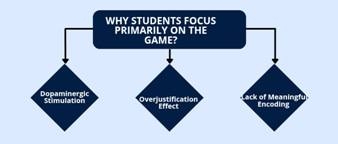
Figure 1. Psychological Mechanists: Why Students Focus Primarily on the Game
Methodology. Research Design
This study employed a quantitative experimental design to investigate the effects of gamification on vocabulary acquisition, engagement, and retention among undergraduate students in the Modern Assessment Technologies course. The experimental design allowed for the comparison of two instructional approaches—traditional and gamified—to determine their relative effectiveness in supporting learning outcomes.
Participants. The study involved a total of 53 bachelor students enrolled in the Modern Assessment Technologies course. Participation in the study was voluntary, and all students completed the assigned tasks within their regular class schedule. The participants were randomly assigned to two groups: Group A (Gamification): 28 students engaged in the gamified learning intervention using digital platforms and interactive activities. Group B (Traditional): 25 students received instruction using conventional methods, including printed worksheets and verbal explanations. All participants were enrolled in the same course and had comparable initial knowledge of the target vocabulary, as determined by a pre-test.
Materials. The instructional materials for the study included: 1)10 target vocabulary words related to modern assessment technologies; 2) Digital platforms: Kahoot and Quizlet, EDUCAPLAY (Figure 2) for gamified activities and interactive exercises; 3) Testing instruments: Matching worksheets and online quizzes for pre-test, immediate post-test, and delayed post-test assessments. The same content was delivered to both groups to ensure comparability, with gamification elements added only for Group A.
Research Procedures. The study was conducted in four main steps: 1. Pre-Test: Both groups completed a matching activity to assess baseline vocabulary knowledge. This task involved matching the 10 target words with their definitions. 2. Instructional Intervention: 1. Group A (Gamified): Students engaged with the vocabulary content through interactive digital games on Kahoot and Booklet. Group B: Students received conventional instruction, completing printed worksheets and verbal exercises without gamified elements. 3. Immediate Post-Test: At the end of the session, both groups completed a matching activity to evaluate initial vocabulary acquisition. Group A additionally completed reflection and reinforcement questions to strengthen engagement and cognitive processing. 4. Delayed Post-Test: Two days after the initial session, both groups completed the same matching activity to assess long-term retention of the vocabulary.
Qualitative Feedback: Group A completed a short five-item survey to provide feedback regarding engagement, motivation, and perceived effectiveness of the gamified intervention.
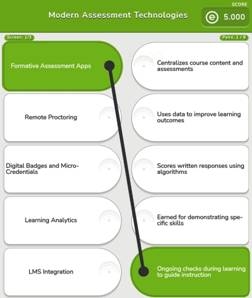
Figure 2. Tasks in EDUCAPLAY platform
Results. Test Performance of Both Groups
The study assessed vocabulary acquisition and retention through pre-test, immediate post-test, and delayed post-test. Both groups were evaluated on the same 10 vocabulary terms. Group A (Gamified + Reflection): 28 students and Group B (Traditional): 25 students
Table 1.
Pre – Test results
|
Group |
Mean Score |
Standard Deviation |
|
A |
4.8 |
1.2 |
|
B |
4.9 |
1.3 |
Both groups demonstrated comparable baseline performance, confirming initial equivalence before the intervention.
Table 2.
Immediate Post –Test Results
|
Group |
Mean Score |
Standard Deviation |
|
A |
9.2 |
0.8 |
|
B |
7.5 |
1.1 |
Group A showed a substantial increase in performance compared to Group B. Gamified elements, combined with reflection tasks, appeared to enhance both accuracy and engagement.
Table 3.
Delayed Post – Test Results (Two days later)
|
Group |
Mean Score |
Standard Deviation |
|
A |
9.0 |
0.9 |
|
B |
7.2 |
1.2 |
Group A maintained high retention, indicating the long-term effectiveness of gamified learning with cognitive reinforcement while group B showed little improvement, and some forgetting occurred, as reflected by the slightly decreased mean score.
Bar Chart Performance Comparison. Above are the test results for both groups at each stage (Table 1, Table 2, Table 3). Next, we will compare all the results in the Bar Chart (Figure 3).
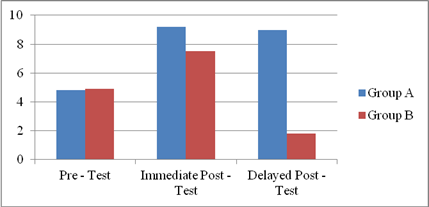
Figure 3. Comparing the results
Group A consistently outperformed Group B in post-tests and gamified students retained vocabulary better over the two-day interval. In engagement, observational notes and qualitative feedback indicated higher motivation and active participation in Group A.
Discussion. The results of this study demonstrate that gamified learning, when combined with reflective exercises, can significantly improve vocabulary acquisition, student engagement, and long-term retention. Comparing the performance of the gamified group with the traditional group reveals several important insights for educational practice and instructional design.
Initially, both groups showed similar performance on the pre-test, indicating that any differences observed in subsequent assessments are likely attributable to the interventions rather than pre-existing knowledge. Group A, which engaged in gamified activities incorporating interactive features such as visuals, timers, competition, and reflection tasks, consistently achieved higher scores on both immediate and delayed post-tests. This outcome suggests that gamification not only enhances motivation during the learning process but also supports the consolidation of knowledge into long-term memory.
The effectiveness of gamification can be explained by underlying psychological mechanisms. Interactive and competitive elements in gamified learning are known to activate dopamine-related reinforcement pathways, increasing focus and engagement. However, previous research [6, p. 9-15] emphasizes that game elements alone may lead students to concentrate more on the entertainment aspects than on learning. In this study, the inclusion of reflective and reinforcement tasks ensured deeper cognitive processing, promoting elaborative encoding and better retention of vocabulary, in line with the levels-of-processing framework.
In summary, these findings support the broader literature indicating that thoughtfully designed gamification, when integrated with reflective and cognitively engaging tasks, can enhance both engagement and learning outcomes. Compared to traditional instruction, gamified approaches provide a more interactive and stimulating environment, promoting active participation, immediate feedback, and improved retention of knowledge over time.
Conclusion
This study examined the impact of gamified learning on vocabulary acquisition, engagement, and retention among undergraduate students. The findings show that gamification, especially when combined with reflective and cognitively engaging tasks, significantly improves both immediate learning outcomes and long-term retention compared to traditional methods. The gamified group not only achieved higher post-test results but also retained knowledge more effectively over time.
These outcomes can be explained by increased motivation and attention through interactive elements such as feedback, competition, and visual support, alongside deeper cognitive processing supported by reflection activities. Student feedback further confirmed that gamified learning is engaging and motivating, helping to connect enjoyment with meaningful learning.
Overall, gamification proves to be an effective pedagogical approach that enhances both performance and retention. It offers a flexible strategy for modern education and holds strong potential for creating more engaging and effective learning environments.
References:
- Karl M. Kapp, The Gamification of Learning and Instruction: Game-Based Methods and Strategies for Training and Education // - Fieldbook. – 2012. – P.362.
- Kurni, M., Krishnamaneni, R., K. G., S. Psychological Foundations and Behavioral Impact of Gamification. In: Gamified Education. Springer, Cham. https://doi.org/10.1007/978-3-032-04718-2_13. - 2026.
- Ryan, R. M., & Deci, E. L. Intrinsic and extrinsic motivations: Classic definitions and new directions // Contemporary Educational Psychology, 25(1), PP. 54–67. – 2000.
- Albert Bandura, Richard H Walters. Social learning theory // Prentice-hall 1, PP. 33-52, - 1977.
- Duisenova M.M., Jorabekova A.N., Abramova G.I. Bastauysh mektepte agylshyn tіlі sabagyndagy geimifikacia: tiіmdіlіgі men qoldanu mumkіndіgі [Gamification in English Lessons at Primary School: Effectiveness and Application Possibilities] // Iasaui universitetіnіn habarshysy. – 2024. – №2 (132). – B. 283–295. https://doi.org/10.47526/2024-2/2664-0686.62
- Deterding, S., Dixon, D., Khaled, R., & Nacke, L. From game design elements to gamefulness: Defining gamification // In A. Lugmayr et al. (Eds.), Proceedings of the 15th International Academic MindTrek Conference: Envisioning Future Media Environments pp. 9 – 15. – 2011.
дипломов