Статья опубликована в рамках: Научного журнала «Студенческий» № 2(340)
Рубрика журнала: Экономика
Секция: Маркетинг
Скачать книгу(-и): скачать журнал часть 1, скачать журнал часть 2, скачать журнал часть 3, скачать журнал часть 4, скачать журнал часть 5, скачать журнал часть 6, скачать журнал часть 7
THE IMPACT OF ARTIFICIAL INTELLIGENCE ON MODERN MARKETING

ВЛИЯНИЕ ИСКУССТВЕННОГО ИНТЕЛЛЕКТА НА СОВРЕМЕННЫЙ МАРКЕТИНГ
Окорокова Валерия Денисовна
студент, Институт промышленного менеджмента, экономики и торговли, Санкт-Петербургский Политехнический университет Петра Великого,
РФ, г. Санкт-Петербург
Семёнова Мария Станиславовна
студент, Институт промышленного менеджмента, экономики и торговли, Санкт-Петербургский Политехнический университет Петра Великого,
РФ, г. Санкт-Петербург
Ферсман Наталия Геннадиевна
научный руководитель, канд. пед. наук, доц. Высшей школы лингвистики и педагогики, Санкт-Петербургский Политехнический университет Петра Великого,
РФ, г. Санкт-Петербург
ABSTRACT
This article is devoted to the analysis of artificial intelligence technologies used in modern marketing. Among other things, the use of intelligent chatbots with enhanced functionality is being considered, providing more efficient and operational interaction with customers, mechanisms for personalizing marketing offers, as well as content creation processes using neural networks and machine learning algorithms. The impact of the development of artificial intelligence on the marketing sphere and the transformation of consumer interaction processes is analyzed based on practical examples of the introduction of AI into marketing strategies of various companies. The key trends and potential directions of further development of the use of artificial intelligence technologies in marketing activities are determined. The purpose of the article is to assess the impact of artificial intelligence on marketing.
АННОТАЦИЯ
Данная статья посвящена анализу технологий искусственного интеллекта, используемых в современном маркетинге. В том числе рассматривается применение интеллектуальных чат-ботов с расширенными функциональными возможностями, обеспечивающих более эффективное и оперативное взаимодействие с клиентами, механизмы персонализации маркетинговых предложений, а также процессы создания контента с использованием нейросетей и алгоритмов машинного обучения. Анализируется влияние развития искусственного интеллекта на маркетинговую сферу и трансформацию процессов взаимодействия с потребителями на основе практических примеров внедрения ИИ в маркетинговые стратегии различных компаний. Определяются ключевые тенденции и потенциальные направления дальнейшего развития использования технологий искусственного интеллекта в маркетинговой деятельности. Цель статьи: дать оценку влияния искусственного интеллекта на маркетинг.
Keywords: artificial intelligence; marketing; AI capabilities; chatbot; content personalization; content generation; process automation.
Ключевые слова: искусственный интеллект; маркетинг; возможности ИИ; чат-бот; персонализация контента; генерация контента; автоматизация.
The modern world is in a constant state of transformation, where the latest technologies play a crucial role in various spheres of life. One of the most notable trends in recent years is the rapid development of artificial intelligence (AI). According to the definition of the American software development company OracleCorporation, artificial intelligence is a system or machine that can simulate human behavior to perform certain tasks and can be gradually trained using the information received [1].
AI has become an integral part of modern marketing, providing organizations with new opportunities to achieve efficiency and success. Today, the main component of a successful marketing strategy is the effectiveness of the introduction of artificial intelligence into the functioning of the organization. With access to a large amount of data, AI can identify trends and predict consumer desires and preferences, allowing companies to customize more personalized marketing offers. Artificial intelligence also performs legal functions, creates pricing and promotion strategies, and conducts marketing research and development [2]. All this helps organizations save time and resources, reducing costs and increasing work efficiency.
So, at present, the role of artificial intelligence is a significant factor in the work of organizations. This technology has brought with it new perspectives and business opportunities, changing approaches to advertising, consulting, and data analysis.
Today's successful companies cannot help but pay attention to the capabilities of artificial intelligence that allow them to stay ahead of their competitors. The use of artificial intelligence in marketing has become popular due to the ability to increase the effectiveness of advertising campaigns, personalize content, and predict customer needs.
According to experts, the global market for artificial intelligence in marketing in 2020 was estimated at 12 million US dollars, and by 2028 it is likely to reach 107 million US dollars. It is expected that during 2021-2028, its growth will be 31.6%. The growing adoption of customer-oriented marketing strategies and the increased use of social media platforms for advertising are among the factors contributing to the growth of artificial intelligence in the marketing market [3].
Most companies in the Russian market (about 56%) have not yet tested the technology at the corporate level, a third of companies (about 27%) are experimenting with generative AI, and about 12% have already identified priority functions and scenarios for implementation.
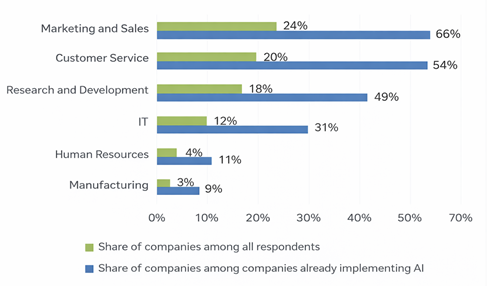
Figure 1. Stages of AI implementation in Russian companies [4]
Top managers of Russian companies note that the most popular areas where generative AI is used are customer service (interactive assistants), marketing and sales, and IT (code writing assistant for developers). According to the chart, the creation of creative materials using artificial intelligence in the field of marketing and sales occupies a leading position (66%).
There are several directions in the use of neural networks used in marketing. For example, neural networks for creating text (CopyMonkey, RuGPT-3, Anyword), for naming and logos (Looka, Namelix, Brandmark, Turbologo), for creating pictures and videos [5].
In turn, the demand for chatbots is increasing, which can filter a huge amount of information and data present on the network, as well as provide the necessary information in accordance with the context.
According to a report on the website of the National Center for the Development of Artificial Intelligence under the Government of the Russian Federation, the five main use cases that have brought significant improvements and maximum impact to most organizations in the period from 2020-2021 to 2022-2023 are applications on platforms that allow managing customer relationships, profiling a customer service personality, and chat.-bots with advanced features [6]. Intelligent chatbots have become widespread in social networks and messengers such as Facebook (owned by Meta, recognized as extremist and banned in Russia), WhatsApp, Vkontakte, Odnoklassniki, Telegram, Viber.
Chatbots perform several functions, including the main ones: maintaining a dialogue with users, integrating with the customer's systems for data transmission and information processing, analyzing dialogues to determine customer needs, connecting the operator if necessary to improve the quality of service, and voice recognition for ease of interaction. One of the most important tasks of chatbots is to consult clients both initially and subsequently. This allows you to effectively integrate the bot into the company's CRM system and improve the quality of service [7]. To date, Sber Business Soft LLC has provided access to the functionality of the Sber Businessbot service. It is embedded on the company's website or in messengers and, according to a pre-prepared scenario, provides automatic answers to customer questions. For example, the bot will provide the address and tell you about the methods of registration, payment and delivery of goods. Sberbank is in touch 24/7, provides 30 ready-made script templates for dialogue, and helps to save up to 20% of operator costs [8].
From a practical point of view, the goal of implementing chatbots is to reduce customer service costs, meaning specific automation through chatbots can help optimize costs and improve company performance.
Artificial intelligence is actively used in marketing to create and generate diverse content.
Thanks to neural networks and machine learning algorithms, AI can analyze large amounts of data, study examples and patterns, and then generate unique text designed to meet the needs and desires of the target audience. Such content can be used for product descriptions, news, and even for creating advertising slogans. For example, in early December 2023, Google introduced the Gemini artificial intelligence model, which generates computer code, tables, various types of texts and images. Also, this model from Google is able to interact with video, recognizing and voicing various actions [9].
AI opens new horizons for entrepreneurs, allowing them to personalize recommendations for their clients and significantly improve their interaction with them. Personalization of recommendations is based on the ability of AI to analyze huge amounts of data about the behavior and preferences of each individual customer.It is actively used in targeted advertising, which allows you to more accurately identify the target audience, consider its preferences and behavioral characteristics. In 2021, Google Performance Max was launched in the field of targeted advertising. This system, equipped with artificial intelligence, can manage ads on all Google sites at once. The system will find potential customers and display the most suitable ads [10]. Or the Epica yogurt brand, in collaboration with the DADA Agency, created all visual content for its social networks for a month using the DALLE 2 and Midjourney neural networks [4].
Through continuous learning and adaptation, AI can offer recommendations that most closely match the expectations and interests of each client, considering their preferences. At the same time, the system analyzes many parameters, such as viewed products, search queries, products added to the cart, purchases made, reviews left, and much more. Each of these factors has its own weight, which affects the result. E-commerce giants such as Wildberries and Ozon are actively using AI to analyze user behavior on their websites. They create personalized product recommendations that are most likely to attract the attention of a particular customer. This allows you to increase sales and improve the user experience.
According to a report by The State of AI in Marketing, executives are already realizing the full power of artificial intelligence technologies for business growth. The survey data showed that 68% of marketing managers at the director level and above believe that if artificial intelligence and automation were fully implemented in their company, the business would achieve unprecedented growth. 62% of business leaders say that their companies have already invested in artificial intelligence and automation tools that their employees can use: of these, 71% report a positive return on investment, and 72% say that artificial intelligence and automation increase their employees' productivity [11].
However, despite all the advantages, artificial intelligence also introduces certain challenges and risks for brands in marketing. This includes ethical issues related to the use of customer data and the transparency of algorithms. In addition, highly qualified researchers and specialists are required to competently develop and implement artificial intelligence. That is, the introduction of AI leads to managerial changes in the structure of organizations working in this field. Instead of the traditional organizational structure with a vertical hierarchy, new work models based on flexibility, collective intelligence and rapid adaptation to changes may appear. Although the use of artificial intelligence entails a change in professional requirements, it does not lead to the disappearance of professions. First, it is necessary to adapt the content generated by AI. Secondly, improving the efficiency of routine tasks frees up time for important but non-urgent tasks, which facilitates the transition from operational to strategic activities.
The indicators presented in the article prove that the prospects for the development of artificial intelligence in marketing are rapid and promise significant improvements in the quality of customer service and increased effectiveness of many popular campaigns.
The study examined the use of intelligent chatbots that can make communication with customers more personalized and effective. Because they perform many tasks automatically, using chatbots helps reduce the cost of customer service and marketing operations. AI also has great potential to create personalized content for an individual user, considering their interests and preferences. This method optimizes communication with the public, increases its interest and increases the effectiveness of advertising campaigns. Thus, it helps to reduce the cost of marketing research and improve the quality of the services offered. The main trends and forecasts for the future indicate that artificial intelligence will continue to evolve and deepen its influence on marketing. It is expected that it will become an integral part of the marketing strategy of almost any company. In the future, he will be able to completely change the marketing landscape, requiring new skills and knowledge from specialists. Therefore, this technology allows companies to create unique and effective marketing strategies that can significantly increase competitiveness in today's dynamic market.
References:
- Artificial Intelligence in Marketing Market Forecast to 2028 - COVID-19 Impact and Global Analysis by Offering, Application, End-Use Industry, and Geography. URL: https://www.reportlinker.com/p06073122/Artificial-Intelligence-in-Marketing-Market-Forecast-to-COVID-19-Impact-and-Global-Analysis-By-Offering-Application-End-Use-Industry-and-Geography.html. – 2024. (Accessed March 21, 2024).
- Artificial Intelligence in Russia – 2023 Trends and Prospects, Yakov & Partners, Yandex. [Electronic resource] //URL: https://ai.gov.ru/knowledgebase/infrastruktura-ii/2023_iskusstvennyy_intellekt_v_rossii_2023_trendy_i_perspektivy_yakov_i_partnery_yandeks/?ysclid=lvaxctvuv3697872050 – 2023. (Accessed March 21, 2024).
- Berezhnaya M.N., Rakhminova E.V., Orlova V.G. Artificial Intelligence in Modern Marketing: Tools, Opportunities, and Prospects // Strategic Planning and Development of Enterprises. - 2023. - Pp. 21–24.
- Corporation O. What is AI? [Electronic resource]. URL: https://www.oracle.com/cis/artificial-intelligence/what-is-ai/. – 2024. (Accessed March 20, 2024).
- Google Ads Help. About Performance Max campaigns. URL: https://support.google.com/google-ads/answer/10724817?hl=en. – 2024. (Accessed March 29, 2024).
- Google Workspace. Bring ideas to life with Gemini for Google Workspace. [Electronic resource]. URL: https://workspace.google.com/intl/ru/solutions/ai/. – 2024. (Accessed March 25, 2024).
- HubSpot. Learn How Marketers Are Leveraging the Power of AI. URL: https://offers.hubspot.com/ai-marketing?hubs_post-cta=bottom&hubs_post=blog.hubspot.com%2Fmarketing%2Fbenefits-of-ai&hubs_signup-url=blog.hubspot.com%2Fmarketing%2Fbenefits-of-ai&hubs_signup-cta=cta_button&hsCtaTracking=8bc62f56-f557-4bf5-b1b3-0798c565a2e1%7C07442dea-58c0-4c3a-b424-fed5cac322f2. – 2024. (Accessed April 1, 2024).
- SberBusinessBot. How SberBusinessbot helps replace an operator and save on customer support [Electronic resource]. URL: https://sberbb.ru/blog/start/tpost/ce285mgn61-kak-sberbiznesbot-pomogaet-zamenit-opera?ysclid=lutiqvxvgy948251907. – 2024. (Accessed March 25, 2024).
- Sleptsova Yu. N. Automation of marketing processes using a chatbot // Scientific journal. - 2020. - No. 3 (48). - P. 38-39.
- Slitskaya A. E. Application of Artificial Intelligence in Marketing // Practical Marketing. 2023. No. 12. pp. 77–80.
- Towards a smarter tomorrow: Impact of AI in the post-COVID era, pwc India. [Electronic resource]. URL: https://ai.gov.ru/knowledgebase/investitsionnaya-aktivnost/2023_na_puti_k_bolee_intellektualynomu_zavtrashnemu_dnyu_vliyanie_ii_v_epohu_posle_covid19_towards_a_smarter_tomorrow_impact_of_ai_in_the_post-covid_era_pwc_india/?ysclid=luwlohyaaf882764921. – 2023. (Accessed March 23, 2024).