
Статья опубликована в рамках: Научного журнала «Студенческий» № 38(334)
Рубрика журнала: Экономика
Секция: Менеджмент
Скачать книгу(-и): скачать журнал часть 1, скачать журнал часть 2, скачать журнал часть 3, скачать журнал часть 4, скачать журнал часть 5, скачать журнал часть 6
PECULIARITIES OF ORGANIZING AND DOING BUSINESS IN GHANA

ABSTRACT
This paper examines the regulatory framework and practical considerations for conducting international trade and business operations in Ghana, a strategically positioned West African economy experiencing sustained GDP growth of 5-7% annually following offshore oil discoveries. The analysis explores Ghana's integration into regional and global trade systems through ECOWAS membership and adherence to the Common External Tariff, which establishes a five-band tariff structure (0-35%) complemented by additional levies including VAT, National Health Insurance Levy, and Education Trust Fund contributions. The study investigates non-tariff measures encompassing import licensing requirements, conformity assessments administered by the Ghana Standards Authority, and customs clearance procedures operating through the Ghana Integrated Customs Management System utilizing ASYCUDA World technology with risk-based channel selectivity. Practical recommendations emphasize strategic utilization of Incoterms 2020 and international arbitration mechanisms, while highlighting the critical importance of establishing local partnerships and engaging professional advisors.
Keywords: Automated System for Customs Data (ASYCUDA), Integrated Customs Management System (GCMS), Common External Tariff (CET), Economic Community of West African States (ECOWAS)
Introduction
Ghana stands as one of West Africa's most dynamic and attractive markets for international business ventures, distinguished by its economic stability, democratic governance, and strategic location on the Gulf of Guinea coast [1]. Following the discovery of substantial offshore oil reserves in 2007, the country has achieved impressive GDP growth averaging 5-7% annually, positioning it among Sub-Saharan Africa's faster-growing economies and attracting significant international attention. However, conducting business in Ghana presents unique challenges and opportunities that differ substantially from developed Western markets, characterized by a complex institutional landscape where formal and informal economic sectors coexist [2]. Ghana's integration into international trade systems through WTO membership, ECOWAS participation, and the African Continental Free Trade Area has created a sophisticated commercial environment requiring compliance with international standards while navigating local regulatory frameworks [3]. The country's pluralistic legal system, which combines English common law traditions with customary and Islamic law [4], adds further complexity to business operations. For international traders and business professionals, success in this environment demands comprehensive understanding of not only formal regulatory requirements, taxation systems administered by the Ghana Revenue Authority [5], and international trade instruments such as Incoterms and letters of credit [6], but also the critical informal and socio-cultural factors that shape Ghanaian business culture, particularly the emphasis on relationship-building, personal trust, and long-term connections that precede formal contractual arrangements [7]. This paper therefore aims to provide a holistic framework examining both the opportunities and constraints that define business establishment and operations in Ghana, equipping potential investors with realistic and actionable insights for effective strategic decision-making in this unique West African market.
Regulation of Foreign Trade in Ghana
Ghana's tariff structure is fundamentally shaped by its membership in ECOWAS and adherence to the ECOWAS Common External Tariff (CET), which establishes harmonized import duties across member states. The CET employs a five-band tariff structure ranging from 0% to 35%, with rates determined by Harmonized System (HS) codes. Essential goods and social necessities receive 0% tariffs, capital goods and raw materials attract 5% duties, intermediate goods face 10% tariffs, finished consumer goods incur 20% duties, and specific protected goods are subject to 35% tariffs [8]. Beyond basic tariff rates, importers must account for additional levies including 15% VAT, 2.5% National Health Insurance Levy (NHIL), and 2.5% Ghana Education Trust Fund levy, which collectively increase the total tax burden significantly [3].
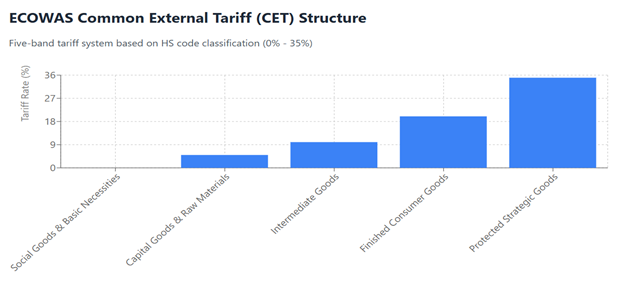
Figure 1. Ecowas Common External Tariff (CET) [3]
Non-tariff measures constitute a substantial regulatory component, encompassing technical regulations, conformity assessment procedures, and import licensing requirements. Products subject to import licensing include pharmaceuticals regulated by the Food and Drugs Authority, telecommunications equipment regulated by the National Communications Authority, and certain agricultural products requiring phytosanitary certification [8]. The Ghana Standards Authority administers conformity assessment procedures requiring imported goods to meet specified technical standards through pre-shipment inspection, testing, and certification. Import prohibitions apply to used refrigerators and air conditioners, used vehicles older than ten years, and counterfeit goods [9].
Ghana generally does not impose export duties on most products to maintain international competitiveness. However, export licensing requirements apply to strategic commodities including unprocessed timber and logs, regulated by the Forestry Commission to encourage domestic processing. The Ghana Cocoa Board (COCOBOD) maintains quality control systems for cocoa exports. Exporters benefit from duty drawback schemes and manufacturing under bond provisions to enhance competitiveness by reducing input costs [10].
The customs clearance process operates through the Ghana Integrated Customs Management System (GCMS), implementing the ASYCUDA World system. Importers must submit advance cargo information including commercial invoices, bills of lading, packing lists, and certificates of origin [11]. The system employs risk-based selectivity, assigning shipments to green channel (immediate release) or red channel (comprehensive inspection) [12].
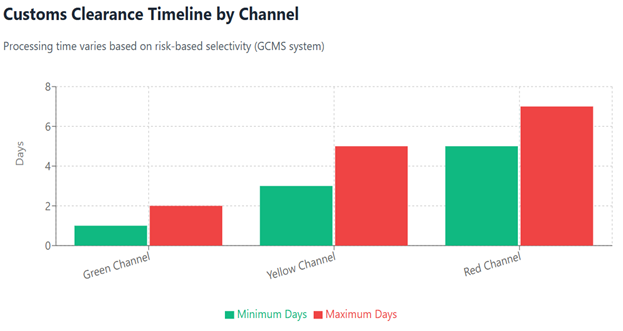
Figure 2. Customs Clearance Timeline by Channel [12]
Essential documentation includes commercial invoices detailing transaction value and Incoterms, bills of lading or airway bills, packing lists, and certificates of origin for preferential tariff treatment [11]. Import licenses are required for controlled goods, and destination inspection requires Clean Certificate of Findings (CCF) or Clean Report of Findings (CRF) from authorized inspection companies [10]. Green channel shipments can be released within 24-48 hours, while yellow and red channel shipments require 2-3 days and 5-7 days respectively, depending on examination results [13].
Recommendations for Foreign Trade Partners
Foreign trade partners should utilize Incoterms 2020 to standardize delivery obligations, risk transfer points, and cost allocation [6]. CIF (Cost, Insurance, and Freight) terms are commonly used for shipments to Ghana, placing transportation and insurance responsibility on sellers [14]. Payment through irrevocable documentary letters of credit governed by UCP 600 offers security for both parties through bank intermediation and documentary compliance verification [6].
Contracts should address Ghana-specific risks including currency fluctuations, regulatory changes, and infrastructure disruptions. Many transactions are denominated in US dollars or euros to avoid exchange rate risks associated with the volatile Ghana cedi [15]. Quality specifications should use international standards with clearly defined inspection and acceptance procedures. Dispute resolution through international arbitration under ICC rules or the Ghana Arbitration Centre is preferable, with awards enforceable under the New York Convention to which Ghana is a signatory [16].
Practical recommendations emphasize establishing relationships with reputable local agents who understand Ghana's regulatory environment and cultural business practices. Foreign partners should conduct thorough due diligence, visit Ghana for face-to-face meetings, and engage qualified professional advisors including trade lawyers and experienced customs brokers [13]. Documentation must be meticulously prepared with attention to accuracy and regulatory compliance. Successful partnerships emerge from patient, culturally sensitive approaches that emphasize consensus-building, personal trust development, and flexible problem-solving over rigid contractual enforcement [17].
Conclusion
Successfully navigating Ghana's business environment requires a dual approach that integrates rigorous compliance with formal regulatory frameworks alongside genuine engagement with informal socio-cultural practices that fundamentally shape commercial relationships. The country's participation in ECOWAS and implementation of the Common External Tariff, combined with sophisticated customs systems like GCMS and ASYCUDA World, demonstrates Ghana's commitment to international trade standards and regional economic integration. However, the complexity of tariff structures with multiple levies, stringent non-tariff measures including import licensing and conformity assessments, and variable customs clearance timelines necessitates meticulous documentation and professional local expertise. Foreign traders must recognize that technical competence in utilizing Incoterms, letters of credit, and international arbitration mechanisms, while essential, proves insufficient without parallel investment in relationship-building, personal trust development, and cultural sensitivity that characterize Ghanaian business practices. The most effective strategy combines thorough due diligence, engagement of reputable local agents and professional advisors, careful risk management through appropriate contract terms and currency considerations, and patient cultivation of long-term partnerships that prioritize consensus and mutual understanding over purely transactional approaches. Ultimately, Ghana's attractive growth trajectory, strategic location, and increasingly sophisticated regulatory environment offer substantial opportunities for international business, but sustained success demands holistic preparation that respects both the formal institutional architecture and the deeply embedded cultural values that govern commercial interactions in this dynamic West African market.
References:
- Asiedu E. Foreign direct investment in Africa: The role of natural resources, market size, government policy, institutions and political instability //World economy. - 2006. - T. 29. - No. 1. - pp. 63-77.
- Ghana. Statistical Service. Ghana living standards survey. - Ghana Statistical Service, 2020.
- Byiers B. Regional Integration and Trade //Yearbook on the African Union. - 2023. - P. 179.
- Mensah-Kutin R. Democratic governance and women's rights in West Africa. - 2010.
- Owusu-Amoah A. et al. Taxation of E-Commerce activities and revenue potential in Ghana //Taxation des activités de commerce électronique et potentiel de recettes au Ghana. Tributação das actividades de comércio. - 2024.
- Zsuzsa V., Milán C., László V. International Chamber of Commerce Rules for Trade Terms-The Terminological Approach. - 2021.
- Hofstede G. Culture's consequences: Comparing values, behaviors, institutions and organizations across nations. - Sage publications, 2001.
- Addy E., Ansong E. Examining the impact of Digitalization on the Import Clearance Process at the Tema Port, Ghana //WISCONSIN JOURNAL OF ARTS AND SCIENCES. - 2024. - P. 61.
- Abreha KG et al. Industrialization in Sub-Saharan Africa: seizing opportunities in global value chains. - World Bank Publications, 2021.
- Owusu-Amoah A. et al. Taxation of E-Commerce activities and revenue potential in Ghana //Taxation des activités de commerce électronique et potentiel de recettes au Ghana. Tributação das actividades de comércio. - 2024.
- Pasquali P., Xu W. Ghana's Free Zones Strategy and the “Role of China” in It // Revue internationale des études du développement. - 2023. - No. 252. - pp. 57-81.
- Agbo EI Transfer Pricing Development For Taxation Purposes: Africa As The Focal Point //Innovations. - 2024. - T. 77. - P. 1678-1694.
- Miloshoska D., Vasileska L. LEGAL FRAMEWORKS FOR IMPLEMENTING CUSTOMS RISK MANAGEMENT. - 2025.
- Oluwaferanmi A. Impact of Regulatory Reforms on Port Efficiency: Analyzing the Effect of Ghana’s Port Reforms on Time and Cost Savings in Import and Export Procedures. - 2025.
- Ramberg J. INCOTERMS 2010 //Eur. JL Reform. - 2011. - T. 13. - P. 380.
- Yensu J. et al. THE EFFECT OF EXCHANGE RATE VOLATILITY ON ECONOMIC GROWTH //Risk Governance & Control: Financial Markets & Institutions. - 2022. - T. 12. - No. 4.
- Whitfield HF Ghana's Legal Framework for the Constitutional and Statutory Application of Arbitration //J. Pol. & L. - 2024. - T. 17. - P. 1.
- Korankye-Sakyi FK, Dwomoh KA Towards a conducive investment climate within Ecowas: The case for the amendment of sections 27 and 28 of the Ghana Investment Promotion Center act 865 of 2013: Towards a conducive investment climate within Ecowas: The case for the amendment of sections 27 and 28 of the Ghana Investment Promotion Center act 865 of 2013 //UCC Law Journal. - 2021. - T. 1. - No. 1. - pp. 57-80.