Статья опубликована в рамках: XCVIII Международной научно-практической конференции «Вопросы технических и физико-математических наук в свете современных исследований» (Россия, г. Новосибирск, 22 апреля 2026 г.)
Наука: Технические науки
Секция: Информатика, вычислительная техника и управление
Скачать книгу(-и): Сборник статей конференции
дипломов
PROSPECTS FOR THE APPLICATION OF INDUSTRIAL INTERNET OF THINGS TECHNOLOGIES IN MONITORING INDUSTRIAL EQUIPMENT

ПЕРСПЕКТИВЫ ПРИМЕНЕНИЯ ТЕХНОЛОГИЙ ПРОМЫШЛЕННОГО ИНТЕРНЕТА ВЕЩЕЙ В МОНИТОРИНГЕ ПРОИЗВОДСТВЕННОГО ОБОРУДОВАНИЯ
Гончаров Роман Дмитриевич
канд. техн. наук, доцент кафедры цифровое управление процессами в АПК, Саратовский государственный университет генетики, биотехнологии и инженерии имени Н. И. Вавилова,
РФ, г. Саратов
Никитенко Кирилл Сергеевич
аспирант кафедры цифровое управление процессами в АПК, Саратовский государственный университет генетики, биотехнологии и инженерии имени Н. И. Вавилова,
РФ, г. Саратов
ABSTRACT
Modern industrial enterprises experience a growing need for continuous equipment monitoring, since even short-term downtime leads to significant economic losses, while the increasing complexity of technological lines complicates traditional maintenance regulations. Under these conditions, the concept of the Industrial Internet of Things (IIoT) becomes a system-forming technology of digital transformation: sensors and controllers installed on equipment nodes generate a stream of telemetry that enables the transition from reactive repair to condition-based maintenance and predictive strategies. The most practical initial monitoring loop for many enterprises is the registration of electrical consumption parameters (voltage, current, active power, energy, frequency, power factor) as universal indicators of load, operating modes, and potential deviations in the technological process.
The aim of this work is, based on the analysis of scientific sources and the practical implementation of a prototype hardware-software complex, to present the prospects for the application of IIoT in monitoring industrial equipment and to demonstrate how a minimalistic “edge” monitoring node can serve as a core for further scaling to a full-fledged IIoT platform. The article considers the architectural principles of IIoT and cyber-physical systems in industry [2], the role of edge computing [8, 9], approaches to monitoring and predictive maintenance [4–6], issues of interoperability and standardization [11–14], as well as cybersecurity challenges of industrial digital environments [15–18].
The practical part includes a description of the implemented prototype: a polling module for an electrical parameter measuring device, a time-series storage based on SQLite, a REST interface for data acquisition, and a web interface for real-time visualization and conducting “experimental” measurement sessions with data export to CSV for subsequent analysis. The results demonstrate the applicability of the approach for operational monitoring of equipment operating modes and form the basis for the implementation of predictive analytics, digital twins, and integration with MES and ERP systems in the future.
АННОТАЦИЯ
Современные производственные предприятия испытывают растущую потребность в непрерывном мониторинге оборудования, поскольку даже кратковременные простои приводят к существенным экономическим потерям, а увеличение сложности технологических линий усложняет традиционные регламенты обслуживания. В этих условиях концепция промышленного Интернета вещей (IIoT) становится системообразующей технологией цифровой трансформации: датчики и контроллеры, установленные на узлах оборудования, формируют поток телеметрии, который позволяет переходить от реактивного ремонта к обслуживанию по состоянию и предиктивным стратегиям. Наиболее практичным стартовым контуром мониторинга для многих предприятий является регистрация параметров электропотребления (напряжение, ток, активная мощность, энергия, частота, коэффициент мощности) как универсальных индикаторов нагрузки, режима работы и потенциальных отклонений в технологическом процессе.
Цель работы - на основе анализа научных источников и практической реализации прототипа программно-аппаратного комплекса представить перспективы применения IIoT в мониторинге производственного оборудования и показать, каким образом минималистичный «пограничный» мониторинговый узел может стать ядром для дальнейшего масштабирования до полнофункциональной IIoT-платформы. В статье рассматриваются архитектурные принципы IIoT и киберфизических систем в промышленности [2], роль пограничных вычислений [8, 9], подходы к мониторингу и предиктивному обслуживанию[4-6], вопросы интероперабельности и стандартизации [11, 12, 13, 14], а также проблемы кибербезопасности индустриальных цифровых контуров [15, 16, 17, 18].
Практическая часть содержит описание реализованного прототипа: модуль опроса измерительного устройства электрических параметров, хранилище временных рядов на базе SQLite, REST-интерфейс для получения данных, веб‑интерфейс для визуализации в реальном времени и проведения «экспериментальных» серий измерений с экспортом данных в CSV для последующего анализа. Результаты демонстрируют применимость подхода для оперативного контроля режимов оборудования и формируют основу для внедрения предиктивной аналитики, цифровых двойников и интеграции с MES, ERP в перспективе.
Keywords: digital twin, industrial production, equipment monitoring, Industrial Internet of Things, production optimization, Industry 4.0.
Ключевые слова: цифровой двойник, промышленное производство, мониторинг оборудования, промышленный интернет вещей, оптимизация производства, Индустрия 4.0.
Introduction
The industrial sector is entering a phase where competitiveness is determined not only by the quality of equipment and personnel, but also by data maturity: the ability of an enterprise to collect telemetry, detect deviations, optimize operating modes, and minimize downtime. Industry 4.0, as a concept of “smart manufacturing,” is based on cyber-physical systems and the Industrial Internet of Things, which provide connectivity, data collection, and subsequent analytics [2, 3]. Review studies emphasize that IIoT forms the foundation for new business models of equipment servicing, improved energy efficiency, and enhanced occupational safety through extended monitoring [1]. Russian studies also highlight the focus on monitoring the equipment lifecycle, interoperability, and cybersecurity risks, as well as the role of IIoT in energy consumption management [7].
In practice, most industrial enterprises face a typical set of problems:
1) Low equipment observability. Equipment operates “blindly”: only failures or the final result of the process are recorded, while operational parameters (load, cycle frequency, overloads) are not monitored.
2) Prevalence of scheduled maintenance. Maintenance is performed “by calendar,” which leads either to excessive servicing or to missing degradation, especially under variable load conditions.
3) Data fragmentation. Even when sensors are available, data may be distributed across different systems without unified identifiers, time synchronization, and a holistic view. This is a typical problem for IIoT environments, where multiple protocols and vendors coexist [17].
4) Latency and cost of telemetry transmission. Transmitting “raw” data streams to the cloud requires bandwidth and increases latency; therefore, the role of edge computing is increasingly emphasized in the literature, where primary processing is performed close to the data source [8, 9].
5) Security requirements. Industrial connectivity increases system vulnerability: issues of segmentation, authentication, updates, and incident monitoring are critical [18].
Under conditions of limited resources, enterprises often require a “minimum viable” monitoring loop that delivers quick results and allows for дальнейшего расширения. One of the most accessible options is monitoring the electrical parameters of equipment. The reasons for the practicality of this approach are as follows:
- electrical parameters are accessible for most electric drives without вмешательства в механику;
- active power and current reflect load and deviations in the technological process;
- power factor and frequency can serve as indicators of power supply quality and converter operating modes;
- accumulated energy provides an integral metric of efficiency and the “cost” of performing production operations, which is important for energy management.
From a scientific perspective, electrical telemetry is conveniently integrated into multi-level models of cyber-physical systems and IIoT architectures: the field layer (sensors, measurement devices), the transport layer (gateways, protocols), and the application layer (storage systems, analytics, interfaces) [17].
The purpose of this article is to demonstrate the prospects for the application of IIoT technologies in equipment monitoring using the example of a prototype software system that implements real-time acquisition, storage, and visualization of electrical parameters, as well as experimental measurement sessions, and to formulate a scientifically grounded direction for further development toward a predictive diagnostics system.
Methodology and Prototype Architecture
Conceptual Foundations: IIoT and Cyber-Physical Architectures
In the literature, IIoT is often described as an evolution of industrial automation, where the key value lies not in the mere connection of individual sensors, but in the construction of a sustainable “data–knowledge–action” loop. The review by Xu et al. emphasizes that industrial IoT requires a systematic approach to interoperability, scalability, data management, and security [1]. The architecture of cyber-physical systems for manufacturing (for example, the 5C architecture) proposes a logical hierarchy: from data acquisition and conversion into information to the level of cognitive analytics and process configuration [2].
Russian studies also propose multi-level IIoT models, emphasizing the role of monitoring and lifecycle management of equipment, as well as the connection with service economics and energy efficiency [7].
An important practical conclusion from these approaches is that a monitoring system should be designed as extensible: even if the initial stage involves simple telemetry, the architecture must allow for the integration of new measurement channels (vibration, temperature, acoustics), the implementation of diagnostic algorithms, and integration with enterprise systems.
Selection of Edge Architecture and the Role of Edge Computing
The transition to IIoT does not necessarily imply a mandatory “cloud-based” solution. On the contrary, the edge approach is considered as a way to reduce latency, decrease data transmission costs, and improve system resilience under unstable network conditions [8, 9]. In the context of equipment monitoring, this implies:
- primary filtering, aggregation, and buffering of data locally;
- local storage of time series for subsequent export;
- ensuring the operation of the user interface within a local network;
- the possibility of further synchronization of aggregated data with higher-level systems (enterprise server or cloud) as needed.
Thus, the prototype in this work is implemented as an edge monitoring node capable of operating autonomously and providing the operator with an observation interface without mandatory dependence on external infrastructure.
Architecture of the Implemented Prototype
The implemented software system is built according to the principle “sensors → data acquisition module → storage → API → web visualization.” In standard IIoT terminology, this corresponds to the physical layer, the transport layer, and the application layer [17].
Hardware Layer (Field Level).
As a source of telemetry, an electrical parameter measurement module (a typical class of devices for energy monitoring) is used, providing measurement of:
- voltage U (V),
- current I (A),
- active power P (W),
- accumulated energy E (kWh),
- frequency F (Hz),
- power factor PF (cos φ).
At the level of industrial compatibility, the use of Modbus RTU is widespread for such measurement devices. The Modbus standard defines the communication format and the basic principles of register addressing [11].
Software Component (Edge Layer).
The prototype is implemented as a local service that includes:
- a module for polling the measurement device with a sampling frequency of 5 Hz;
- a storage module based on SQLite, representing data as a time series with timestamps and fields U, I, P, E, F, PF, as well as a session identifier;
- an HTTP, REST layer providing data to the web client;
- a web-based operator interface.
Data Model and Time-Series Integrity
For both scientific and practical value, the correctness of time-series storage is critical: a consistent time format, stable ordering, prevention of data point “mixing,” and the ability to export data for statistical processing and model development.
In the prototype, data is organized as a sequence of measurements with timestamps. For energy monitoring tasks, it is useful to consider a discrete approximation of accumulated energy. If the power  is measured at time
  , then the energy over the interval Δt can be estimated as:
 (1)
(1)
where is in watts, and  is in kWh.
Data export to CSV should ensure compatibility with widely used analysis tools. Therefore, in the prototype, export is implemented with the separation of date and time into individual columns and a fixed order of fields U, I, P, E, F, PF.This facilitates further modeling and corresponds to engineering practices for preparing datasets for diagnostic and predictive models [6].
Results of Validation and Discussion
Organization of Experimental Validation
To link the software implementation with the scientific task, monitoring must be validated under conditions close to real production modes. A typical experimental design for energy monitoring of equipment includes:
- selection of the object (for example, an electric drive motor, pump, compressor, machine tool, or laboratory setup);
- identification of several operating modes: "idle,” “working load,” “transient processes,” “abnormal load”;
- conducting multiple repetitions to ensure statistical reliability;
- recording time series with the selected sampling frequency;
- comparison of mode “profiles” based on P(t), I(t), PF(t), E(t).
The prototype includes logic for managing “sessions” and experimental runs (modes and repetitions), which corresponds to recommendations for data collection for subsequent diagnostic models, where representativeness, repeatability, and correct labeling are important.
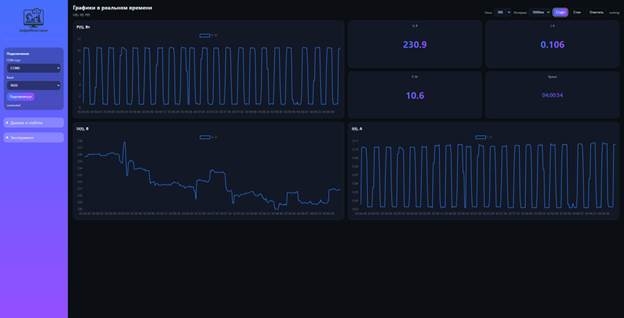
Figure 1. Real-time monitoring interface
Observed Effects and Interpretation of Electrical Parameters
Even without the implementation of complex analytics, time series of electrical parameters provide the operator with informative features:
1) Active power P(t) is the most direct indicator of load. An increase in power under steady-state conditions with an unchanged technological task may indicate mechanical degradation (friction, wear), changes in raw materials, or a decrease in process efficiency. The literature on condition-based maintenance emphasizes the value of continuous monitoring as a basis for early detection of degradation [4].
2) Current I(t) may reflect both an increase in load and electrical anomalies. Longitudinal observation of current in combination with power makes it possible to distinguish mechanical load increases from power supply issues.
3) PF(t) - power factor, sensitive to the type of load and operating modes of converters. PF is useful as an indicator of energy efficiency and the quality of electric drive operation; IIoT studies emphasize energy savings as one of the motivations for implementing monitoring [7].
4) Frequency F(t) is relatively stable in most networks but becomes important when powered by generators or in the presence of network anomalies.
5) Energy E(t) is an integral metric. For production operations, the consumed energy can be conveniently correlated with output (kWh per unit of production), forming the basis for energy analytics.
A practically important aspect is that graphs should be both “live” (allowing the operator to respond to changes) and suitable for dataset formation. Therefore, the prototype implements two modes of operation:
- Real-time — continuous updating of graphs and indicators, enabling detection of deviations and assessment of process stability;
- Experiment — fixed sessions in which the operator sets the mode, sampling frequency, and duration, and then exports the data to CSV.
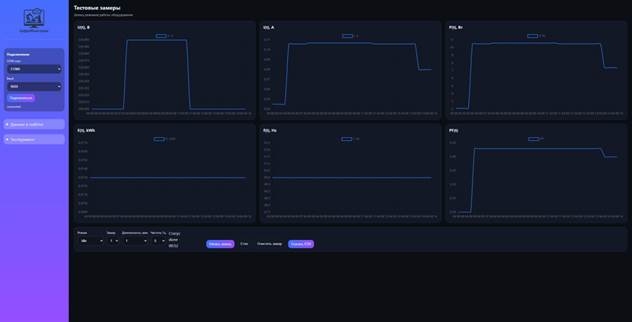
Figure 2. “Experiment” page
Data Export and Dataset Formation
Export to CSV with separate Date and Time columns provides two practical advantages:
- compatibility with Excel and simplification of sorting and filtering;
- ease of synchronization with other sources (for example, event logs or technological markers).
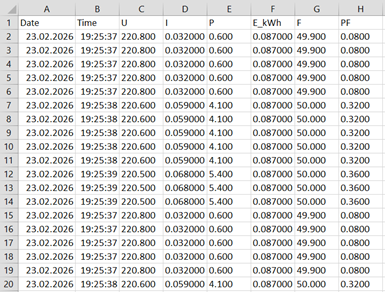
Figure 3. Fragment of the exported CSV file
Discussion of Results in the Context of Predictive Maintenance
Predictive maintenance (PdM) is considered as an evolution of condition-based monitoring: instead of merely recording failure events, the system aims to assess the condition of an object and the risk of failure in advance [5]. The review by Jardine et al. emphasizes that a key element of PdM is the availability of high-quality sensor data and processing models [4]. Modern studies on data-driven PdM methods systematize approaches and demonstrate that the effectiveness of PdM depends on the quality of time series, correct labeling of operating modes, availability of historical examples of degradation, and properly selected features [6].
At the current stage, the prototype implements precisely the infrastructure layer of PdM: reliable collection and storage of telemetry, i.e., the “zero stage,” without which predictive models are not possible. The next step is the implementation of analytics. As promising directions based on the current measurements, the following can be identified:
- anomaly detection based on power and current (for example, through monitoring deviations from a moving average);
- assessment of energy efficiency based on PF and kWh per operation;
- detection of mode changes (time-series segmentation), which is important for subsequent data labeling;
- accumulation of long-term history for building degradation models (in the presence of service labels and maintenance events).
This logic is consistent with the practice of industrial digitalization: first, a measurable layer is created, then a “digital shadow” is added, and finally a full-fledged digital twin with feedback and diagnostic models is developed [10].
It is particularly noteworthy that a similar edge-based approach is demonstrated in applied studies on monitoring pumping equipment, where a local module performs signal processing and interacts with higher-level systems, including via Modbus and communication gateways [19].
Conclusion
The article examines the prospects for the application of Industrial Internet of Things technologies in monitoring industrial equipment and demonstrates that a “minimalistic” energy monitoring loop can serve as an effective starting point for the digital transformation of an enterprise. Based on the analysis of scientific sources, it is shown that the IIoT approach enables the transition from scheduled maintenance to condition-based and predictive maintenance, provided that a properly organized data flow is available [4]. The feasibility of the edge approach is architecturally justified as a means to reduce latency, increase autonomy, and decrease data transmission costs [9].
The practical part presented a prototype implementing the acquisition of electrical parameters of equipment, storage of time series, real-time visualization, and experimental session modes with data export. Such a prototype covers the critically important “zero stage” of PdM — the creation of a high-quality dataset and an operational observability interface. The scientific novelty and practical significance of the solution lie in demonstrating a reproducible and scalable IIoT monitoring architecture that can be extended to a shop-floor platform and further developed toward digital twins and predictive analytics [10, 20].
References:
- Xu L.D., He W., Li S. Internet of Things in industries: a survey. IEEE Transactions on Industrial Informatics, 2014, vol. 10, no. 4, pp. 2233–2243. DOI: 10.1109/TII.2014.2300753.
- Lee J., Bagheri B., Kao H.-A. A cyber-physical systems architecture for Industry 4.0-based manufacturing systems. Manufacturing Letters, 2015, vol. 3, pp. 18–23. DOI: 10.1016/j.mfglet.2014.12.001.
- Lu Y. Industry 4.0: a survey on technologies, applications and open research issues. Journal of Industrial Information Integration, 2017, vol. 6, pp. 1–10. DOI: 10.1016/j.jii.2017.04.005.
- Jardine A.K.S., Lin D., Banjevic D. A review on machinery diagnostics and prognostics implementing condition-based maintenance. Mechanical Systems and Signal Processing, 2006, vol. 20, no. 7, pp. 1483–1510. DOI: 10.1016/j.ymssp.2005.09.012.
- Susto G.A., Schirru A., Pampuri S., McLoone S., Beghi A. Machine learning for predictive maintenance: a multiple classifiers approach. IEEE Transactions on Industrial Informatics, 2015, vol. 11, no. 3, pp. 812–820. DOI: 10.1109/TII.2014.2349359.
- Zhang W., Yang D., Wang H. Data-driven methods for predictive maintenance of industrial equipment: a survey. IEEE Systems Journal, 2019. DOI: 10.1109/JSYST.2019.2905565.
- Grineva N.V., Abdikeev N.M. Industrial Internet of Things as a basis for intelligent manufacturing. Computational Nanotechnology, 2025, vol. 12, no. 3, pp. 96–104. DOI: 10.33693/2313-223X-2025-12-3-96-104.
- Shi W., Cao J., Zhang Q., Li Y., Xu L. Edge computing: vision and challenges. IEEE Internet of Things Journal, 2016, vol. 3, no. 5, pp. 637–646. DOI: 10.1109/JIOT.2016.2579198.
- Satyanarayanan M. The emergence of edge computing. Computer (IEEE), 2017, vol. 50, no. 1, pp. 30–39. DOI: 10.1109/MC.2017.9.
- Kritzinger W., Karner M., Traar G., Henjes J., Sihn W. Digital twin in manufacturing: a categorical literature review and classification. IFAC-PapersOnLine, 2018, vol. 51, no. 11, pp. 1016–1022. DOI: 10.1016/j.ifacol.2018.08.474.
- Modbus Organization. MODBUS application protocol specification V1.1b3. April 26, 2012.
- ISO/IEC. ISO/IEC 20922:2016. Information technology — Message Queuing Telemetry Transport (MQTT) v3.1.1.
- OASIS. MQTT Version 5.0. OASIS Standard. Approved March 7, 2019.
- IEC. IEC 62541 (OPC Unified Architecture). Part 1: Overview and concepts (IEC TR 62541-1:2020).
- Humayed A., Lin J., Li F., Luo B. Cyber-physical systems security: a survey. IEEE Internet of Things Journal, 2017. DOI: 10.1109/JIOT.2017.2703172.
- Lezzi M., Lazoi M., Corallo A. Cybersecurity for Industry 4.0 in the current literature: a reference framework. Computers in Industry, 2018, vol. 103, pp. 97–110. DOI: 10.1016/j.compind.2018.09.004.
- Li Q., Yang Q. Remote monitoring and maintenance for equipment and production lines on industrial Internet: a literature review. Machines, 2022, vol. 11, no. 1, article 12.
- Kouicem D.E., Bouabdallah A., Lakhlef H. Internet of Things security: a top-down survey. Computer Networks, 2018, vol. 141, pp. 199–221. DOI: 10.1016/j.comnet.2018.03.012.
- Short M., Twiddle J. An industrial digitalization platform for condition monitoring and predictive maintenance of pumping equipment. Sensors, 2019, vol. 19, no. 17, p. 3781. DOI: 10.3390/s19173781.
- Lu Y., Liu C., Wang K.I.-K., Huang H., Xu X. Digital twin-driven smart manufacturing: connotation, reference model, applications and research issues. Robotics and Computer-Integrated Manufacturing, 2020, vol. 61, p. 101837. DOI: 10.1016/j.rcim.2019.101837.
дипломов